
You wake up to a chilly house, so you turn up the thermostat and wait for the familiar sound of your furnace kicking on. Except this time, nothing happens.
Well, the good news is that your furnace not turning on doesn’t necessarily mean you have a costly repair or a new heating system in your future. Sometimes, the solution is as simple as replacing your thermostat batteries or flipping a switch.
So before you reach for the phone, try these furnace troubleshooting tips from the residential heating experts at Comfort Zone Services.
Why Is My Furnace Not Turning On?
There are several possible reasons your furnace is not working, ranging from thermostat issues to mechanical problems.
The most common reasons for a furnace not kicking on include:
- Incorrect thermostat settings, dead thermostat batteries, or a faulty thermostat
- The furnace switch is off
- A tripped circuit breaker
- Airflow issues or a dirty filter
- Gas supply or valve problems
- A faulty ignition system
- A malfunctioning blower motor
- A triggered safety mechanism.
Some of these issues are relatively easy to identify and fix yourself, but others require a licensed heating technician.
Safety note: If you smell natural gas (typically described as a rotten-egg or sulfur smell), don’t flip any switches or turn on electrical devices. Instead, leave your house right away and contact your gas utility or emergency services from a safe location.
Furnace Troubleshooting: 5 Things to Check if Your Furnace Won’t Turn On
1. Make Sure Your Thermostat Is Set Correctly
This one might sound obvious, but we’ve shown up for emergency furnace repair calls only to discover there was nothing wrong with the furnace. The thermostat was simply set to COOL.
No judgement from us (after all, we wouldn’t have a job if everyone were an HVAC expert!). But a quick check of your thermostat could save you the cost of a service appointment.
Here’s what to look for:
- Make sure your thermostat is set to HEAT, not COOL or OFF.
- Set the temperature at least a few degrees higher than the current indoor temperature.
- Set the fan to AUTO so it runs as needed during heating cycles.
- Check that your schedule or vacation settings aren’t overriding the temperature you set if you have a programmable or smart thermostat,
Then, give your furnace a few minutes to respond. Some systems have a built-in delay, so the heat might not kick on immediately after you adjust the thermostat.
2. Check Your Thermostat Batteries and Display
If your thermostat settings are correct but your furnace is still not turning on, the thermostat itself could be the culprit.
If your thermostat has a blank display or isn’t responding when you adjust the temperature, try replacing the batteries if your model uses them.
For programmable and smart thermostats, check for error messages or notifications. You can find model-specific troubleshooting instructions in your owner’s manual.
If replacing the batteries doesn’t help, or your hardwired thermostat isn’t responding, you could be dealing with a faulty device, wiring issues, or a power supply problem. A heating technician can determine whether the thermostat needs repair or replacement.
3. Check the Furnace Switch and Circuit Breaker
Even gas furnaces rely on electricity to power components like the ignition system, blower motor, and control board. Your furnace won’t turn on if the power supply is interrupted.
Start by checking the furnace switch. The switch typically looks like a regular light switch and is located on or near your furnace. If you’re wondering which position your furnace switch should be in, it should be switched ON during normal operation.
Next, check your home’s electrical panel to see if the circuit breaker for your furnace has tripped. If it has, and there are no signs of electrical damage, you can try resetting it once by moving the breaker fully to the OFF position and then back to ON.
If the breaker trips again, don’t keep resetting it. It likely means you have an electrical or mechanical problem that needs professional attention.
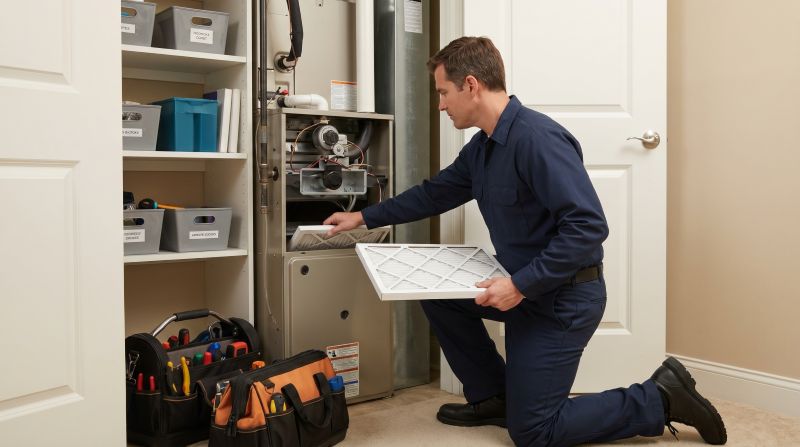
4. Inspect Your Furnace Filter
When was the last time you changed your furnace filter?
One of the most common and preventable causes of heating problems is a dirty furnace filter. As dust, pet hair, dirt, and other airborne particles accumulate on the filter, they restrict airflow through the system.
Your furnace can overheat without enough airflow. This can trigger a safety mechanism that shuts down the equipment to prevent damage. It could explain why your furnace quit working unexpectedly or keeps turning on and off without reaching the desired temperature.
Turn off your furnace and inspect the filter. If it’s visibly dirty or clogged, replace it with a clean one.
We recommend changing standard furnace filters every 60 to 90 days. However, the ideal frequency depends on the type of filter you have, your household, and how often you run your heat.
5. Make Sure Your Vents and Registers are Clear
Blocked supply registers or return air vents can also prevent your furnace from circulating air properly.
Walk through your home and make sure:
- Furniture, rugs, curtains, and other items aren’t blocking vents or registers.
- Supply registers are open, including those in rooms you don’t use frequently.
- Return air grills are free of excessive dust and debris.
If you have a high-efficiency gas furnace with exterior intake and exhaust pipes, it’s worth checking those too.
In London, heavy snowfall and drifting snow can obstruct these pipes, interfering with combustion or preventing exhaust gases from venting properly. Your furnace may shut down as a safety precaution.
Clear the area around the pipes of snow, leaves, and debris. If you see ice buildup or an obstruction inside a pipe, contact an HVAC professional. Don’t try to dismantle the venting yourself.
What are Some Other Reasons for a Furnace Not Working?
If you’ve gone through our furnace troubleshooting checklist and your home heater is still not working, there could be an issue with an internal component or the fuel supply.
Here are some other potential problems that you’ll want to have a professional diagnose and repair:
Gas Supply Issues
Your furnace may not ignite if there’s a problem with the gas valve, gas pressure, or fuel supply.
A licensed heating technician can inspect the system, identify the source of the problem, and perform any necessary repairs.
Never attempt to adjust or repair your furnace’s gas valve or gas connections yourself.
A Faulty Ignition System or Pilot Light
If your furnace is trying to start but isn’t producing heat, something may be wrong with the ignition system.
Most modern gas furnaces use an electronic ignition system to light the burners. A damaged igniter or faulty ignition component can prevent this process from happening.
Older gas furnaces might have a pilot light instead. If you have the experience, you can reset the furnace and light the pilot light. If it won’t stay lit, the issue could be the thermocouple, gas supply, or another component.
A heating technician can determine why your furnace isn’t igniting and get it working safely again.
A Dirty or Faulty Flame Sensor
Your furnace’s flame sensor detects whether the burners have successfully ignited. It will signal the system to shut off the gas supply if it doesn’t detect a flame.
This can happen even when the burners are lit if the flame sensor is dirty or not working properly. As a result, your furnace might kick on for a few seconds before shutting off again.
Having a qualified technician clean or replace the flame sensor may resolve the issue.
A Malfunctioning Blower Motor
The blower motor powers the fan that circulates heated air through your ductwork and into the rooms of your home.
If you can hear your furnace running but little or no air is coming out of your vents, the blower motor could be to blame. Unusual humming, squealing, or rattling noises can also indicate a blower-related problem.
Depending on the cause, an HVAC technician may be able to fix the furnace blower motor or a related component rather than replace the entire assembly.
A Triggered Safety Mechanism
Today’s furnaces have several built-in safety features designed to protect your home and equipment.
For example, a high-limit switch can shut down the burners if the furnace gets too hot, while a pressure switch helps verify that the venting system is functioning correctly before ignition.
After repeated failed ignition attempts or certain other faults, your furnace may also enter a safety lockout mode.
It can be tempting to repeatedly reset your furnace to get the heat going again. However, it’s important to address the underlying problem. And remember, never attempt to bypass a furnace safety mechanism.
When Should You Call for Professional Furnace Repair?
If your thermostat is set correctly, your furnace has power, your filter is clean, and there are no obvious airflow obstructions, it’s time to bring in a professional.
You should also schedule a service call if:
- Your furnace starts but shuts off shortly afterward.
- Your furnace is running but blowing cold air.
- The circuit breaker keeps tripping.
- You hear strange banging, grinding, or squealing noises.
- Your furnace repeatedly displays an error code.
- Your heating system can’t maintain a comfortable indoor temperature.
If your carbon monoxide alarm goes off, leave your home immediately and call emergency services from outside.
When you hire an HVAC technician to repair a furnace, they can test individual components, diagnose the underlying issue, and recommend the most effective solution. In many cases, replacing a single faulty part is all it takes to restore your heat.
For a more in-depth look at the topic, read: “9 Signs You Should Schedule an Emergency Furnace Repair Appointment.”
How Can I Prevent Furnace Problems in the Future?
Not every furnace breakdown is preventable, but a little upkeep can go a long way towards keeping your system running reliably throughout the winter.
In addition to replacing your furnace filter regularly and keeping vents and registers unobstructed, we recommend scheduling professional furnace maintenance once a year, ideally before the start of heating season.
During a furnace tune-up, the technician:
- Inspects the furnace’s components, such as the burners, blower, heat exchanger, ignition system, ductwork, venting, and electrical connections.
- Cleans certain components to remove dust, dirt, and debris.
- Checks the furnace filter.
- Lubricates moving parts.
- Conducts a safety check to test safety controls, carbon monoxide leaks, and proper venting.
- Performs a combustion analysis (i.e., ensuring the furnace is burning fuel safely and efficiently).
- Checks and recalibrates your thermostat, if needed.
- Tests your system’s performance and efficiency.
- Identifies damaged or worn parts.
Catching small issues early can help you avoid unexpected breakdowns, reduce energy costs by maintaining efficiency, and extend the lifespan of your heating equipment.
Furnace Still Not Turning On? We’re Here to Help!
If you don’t have any luck with these furnace troubleshooting tips, the team at Comfort Zone Services can help.
Our family-run HVAC company has served London, Ontario, and surrounding communities for decades. Our licensed technicians have the tools, training, and experience to diagnose, repair, and maintain furnaces of all makes and models. We also offer affordable maintenance packages to keep your equipment in tip-top shape.
Whether you need a minor repair, emergency heating service, or an honest assessment of whether it’s time to replace your furnace, we’ll help you find a solution that fits your needs and budget.
Contact Comfort Zone Services today to schedule furnace repair in London and get back to enjoying a warm, comfortable home.